High-Conflict Co-Parenting Got You Down? Meet the Parenting Coordinator
Co-parenting is hard enough when everyone’s playing nice. But when it starts to feel like your shared calendar could be the next battleground, Houston, we have a problem.
Welcome to the wild world of high-conflict co-parenting—where debates flare up over bedtime, broccoli, or whether soccer practice qualifies as “quality time.” Sound familiar? Don’t worry. There’s a not-so-secret weapon designed for exactly this kind of scenario: the Parenting Coordinator (aka your co-parenting peacekeeper).
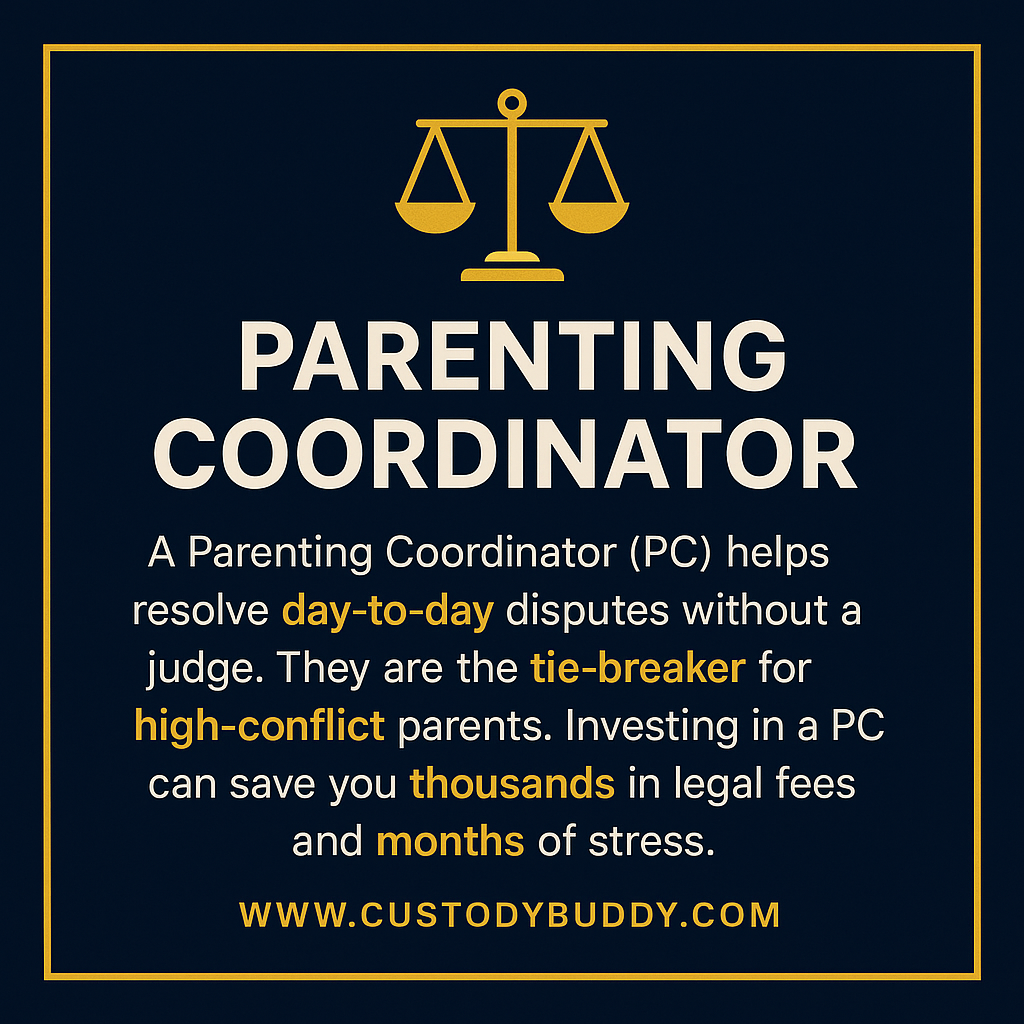
Think of a Parenting Coordinator (PC) as a referee, coach, and parenting therapist all wrapped up in one cool, solution-focused package. They’re here to truce the chaos, protect the kids’ peace of mind, and maybe—just maybe—keep everyone out of court.
What Exactly Is a Parenting Coordinator?
In the simplest terms, a Parenting Coordinator is a specially trained professional (usually with a background in law, therapy, or both) who helps co-parents in high-conflict situations stay on track.
- Neutral third party: They don’t take sides—they take solutions.
- Focus on the kids: Every decision is about “what’s best for the children,” not who bought the better trampoline.
- Better than court: They resolve day-to-day disputes faster than you can say “court adjourned.”
Unlike a judge, a PC won’t wear a robe, and unlike a therapist, they won’t ask about your dreams. Their job is to help both parents communicate more constructively, make decisions jointly, and stay aligned on co-parenting responsibilities without turning life into one long argument.
When Should You Consider Hiring a Parenting Coordinator?
If your latest parenting text thread could double as a courtroom drama, it might be time. Here are some common signs that you could use a Parenting Coordinator in your life:
- You argue about who forgot to send the soccer cleats… again.
- Your communication consists of sarcasm, snark, or smoke signals.
- The court knows you by name—and not because of your charming personality.
The truth is, if even the simple stuff turns into a stand-off, a PC can step in to help transform your co-parenting chaos into something a little more… child-focused (and way less shouty).
How the Parenting Coordinator Process Works
Worried it’s another long, complicated process? It’s actually pretty straightforward—and dare we say, refreshingly practical.
1. Initial Assessment
First, the PC meets with both parents (separately or together) to understand the issues and set some mutually agreed-upon goals. Spoiler alert: world peace is not one of them—but peaceful school pickups definitely could be.
2. Structured Sessions
Next comes regularly scheduled communication. These aren’t therapy sessions; they’re solution-packed problem-solving pow-wows. PCs help navigate parenting plans, schooling disagreements, holidays, you name it.
3. Monitoring and Adjustments
PCs track follow-through and keep everyone on their best co-parenting behavior. Think accountability with a dash of gentle (or not-so-gentle) encouragement.
At every turn, the goal is respectful dialogue and decision-making that keeps your kids out of the crossfire and firmly at the center of decision-making (as they should be).
What’s In It for You? The Benefits of a Parenting Coordinator
You know what’s expensive? Lawyers. You know what’s exhausting? Courtrooms. You know what helps with both? That’s right—a Parenting Coordinator. Here’s why they’re worth considering:
- Save serious cash: Less time in court = more money for school supplies (or ice cream… just saying).
- Resolve punch-card level arguments: PCs help squash the recurring spats before they explode over, say, banana distribution at breakfast.
- Better communication: Over time, PCs teach parents tools to talk to each other like humans, not rival sports commentators.
- Protect kids’ mental health: Less conflict = calmer kids. Science and common sense agree on this one.
- Keep co-parenting on a predictable track: Structure and consistency can be a beautiful thing—ask any kid (or stressed-out parent).
Real Families, Real Wins
Need some proof this isn’t just co-parenting magic beans? Here are a few real-world snapshots from families who’ve worked with Parenting Coordinators:
- Case 1: Two divorced parents were racking up attorney bills like a Netflix binge. With a PC involved, their court visits dropped from monthly to zero in six months.
- Case 2: Parents disagreed about everything (down to sock color). The PC helped them develop a uniform clothing plan for school—it stuck. So did better habits.
- Samantha, mom of two: “We were constantly fighting about drop-off times. Our PC didn’t just solve the issue—they taught us how to solve it ourselves next time.”
No fairy dust. Just good strategy, accountability, and someone who isn’t afraid to say, “Let’s take this down a notch, folks.”
Finding the Right Parenting Coordinator
Before you go casting the Parenting Coordinator version of “The Bachelor,” here are a few tips to find your perfect match:
- Check credentials: Look for backgrounds in mental health, family law, or mediation. Bonus points if they’ve been a PC longer than your kid’s been potty-trained.
- Ask about style: Are they more hands-on? Collaborative? Zero-fluff and full-structure? Find someone whose approach balances firmness with finesse.
- Get references: Other families (or professionals) in your area can be great sounding boards.
You want someone who can navigate tension like a ninja in yoga pants—calm, quick-thinking, and mildly intimidating in the best possible way.
Final Thoughts
If your co-parenting life feels like an ongoing courtroom drama—or a never-ending episode of Judge Judy—it might be time to bring in the big guns (with clipboards and conflict-resolution skills).
A Parenting Coordinator doesn’t just help parents raise their kids—they help parents raise the bar on how they do it. And in high-conflict situations, that boost can make all the difference.
Recommended Resources
These books have helped many parents navigate similar challenges. As an Amazon Associate, I earn from qualifying purchases.
The Co-Parenting Handbook: Raising Well-Adjusted and Resilient Kids from Little Ones to Young Adults Through Divorce or Separation
by Karen Bonnell and Kristin Little
This book offers practical strategies for creating a cooperative co-parenting environment, making it ideal for parents dealing with high-conflict situations.
Disarming the Narcissist: How to Stop the Drama Network and Get What You Want
by Wendy T. Behary
This book provides insights and techniques specifically designed for communicating with narcissistic ex-partners, which is crucial in high-conflict parenting scenarios.
The Emotionally Abusive Relationship: How to Stop Being Abused and How to Stop Abusing
by Brian D. B. M. K. G. M. Harris
Offering awareness and recovery strategies, this book supports parents in recognizing and dealing with emotional abuse, which can often accompany high-conflict parenting.
About the Author
Written and reviewed by Danielle Pike, Founder of CustodyBuddy.com — self-represented litigant, Ontario family law advocate, and legally blind mother of two navigating high-conflict co-parenting in the Ontario court system. Last reviewed: April 2026.
Need to document an incident for court?
The CustodyBuddy Incident Report Generator guides you step by step — Canadian legal classifications, automatic timestamps, and a court-ready export in under 3 minutes.
Legal disclaimer: This article is for educational purposes only and does not constitute legal advice. For advice specific to your situation, consult a qualified Ontario family lawyer or visit CLEO’s Steps to Justice.