Introduction
Ah, the delicate dance of parenting post-separation—where the lines between parental alienation and genuine teenage estrangement blur more than your Instagram filters on a Monday morning. 🤔 Is your teenager pulling away because one parent’s been sneaking poison into their “daily talk” or because they’re just—gasp!—becoming a teen with boundaries? In Ontario family law, telling the difference isn’t just about family drama; it’s about who gets to decide how often you FaceTime (or Zoom) and who calls the shots on major decisions.
Understanding Parental Alienation in Ontario
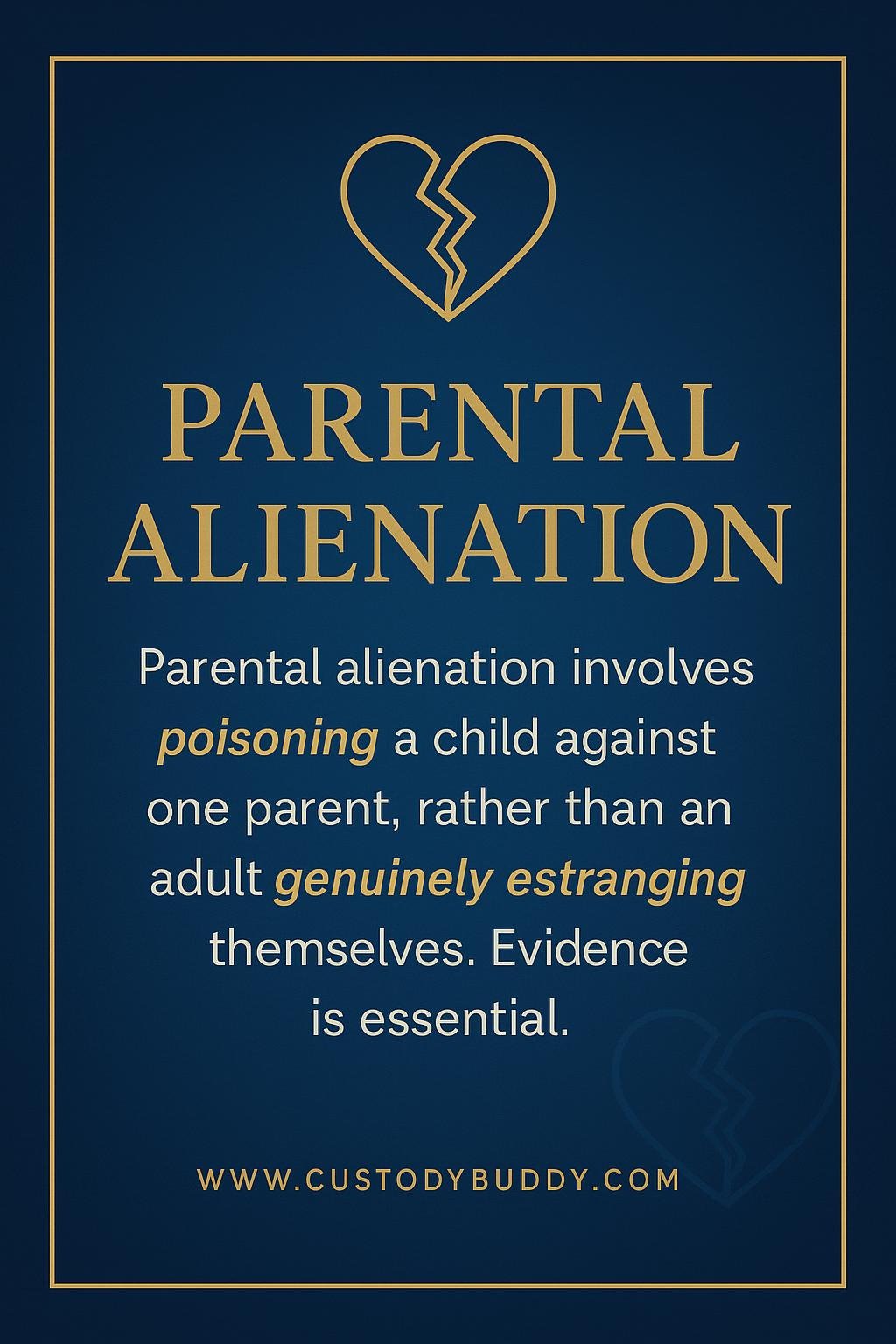
Parental alienation — it sounds like something from a sci-fi thriller, but sadly it’s all too real in family courts. Think of it as one parent slowly turning their kid against the other, like a sneaky influencer hyping a breakup.
- Common behaviours: Whispered bad-mouthing, manipulation, guilt trips, and games that would make even a Netflix drama proud.
- Effect: The child starts to see the other parent less as “Mom” or “Dad” and more like an annoying pop-up ad to be blocked.
- Legal recognition: Ontario courts do take parental alienation seriously, but proving it needs more than “Mom says Dad is lame” evidence.
Understanding Legitimate Estrangement
Legitimate estrangement is less about manipulation and more about real reasons for distance. Imagine your teenager not wanting to hang out because the other parent might be toxic, neglectful, or just plain difficult to be around. Yeah, that counts!
- Examples: Abuse, neglect, or personality clashes so intense even reality TV would be jealous.
- Teen independence: At some point, saying “No thanks, I’m good,” is just a teen growing up, not a sneaky smear campaign.
- Legal lens: The court wants to respect the teen’s space when it’s deserved — say goodbye to unfair visits if real harm’s involved.
Key Indicators and Evidence to Distinguish Between Alienation and Estrangement
How do you tell if the child’s dodging a parent because they’re brainwashed 👹 or genuinely uncomfortable 🧍♀️? Here’s the cheat sheet the courts usually look at:
- Behavioural patterns: Is the child’s negativity consistent and sincere or sudden and scripted?
- Consistency over time: Do feelings shift like a weather vane or remain steady?
- Third-party input: Teachers, counsellors, therapists—think of them as the neutral Netflix reviewers of family dynamics.
- Manipulation signs: Documentation of guilt trips or coercion versus genuine fear or discomfort.
- Abuse or neglect records: Anything to back up serious allegations.
- Professional assessments: Child psychologists and family mediators—yes, they’re basically the Avengers of family law.
What Evidence Ontario Courts Accept and Prioritize
Ontario courts are like gold diggers searching for reliable nuggets of proof to decide what’s best for the child. Here’s their treasure map:
- Testimonies: From parents and, if mature enough, the child themselves.
- Independent expert reports: Custody evaluators and mental health pros who don’t pick sides—no partisans allowed!
- School & medical records: Who knew report cards and doctor notes could hold so much weight?
- Communication record: Texts and emails between parent and child that tell the “real” story.
- Efforts to repair: Proof that a parent tried to mend fences rather than just yelling “It’s not my fault!”
- No hearsay: The courts steer clear of unsubstantiated gossip—sorry, Aunt Karen.
Practical Steps for Courts in Addressing These Issues
Ontario courts don’t just throw their hands up. They get proactive with a toolkit that’s part peacekeeper, part detective:
- Family mediation and counselling: Because sometimes, a chat beats a courtroom.
- Parenting assessments & supervised visits: Like test drives before full custody takes the wheel.
- Adjusting decision-making responsibility: Protecting kids’ best interests might mean shifting who makes the big calls.
- Monitoring & follow-up: Because parenting isn’t a one-off game—courts keep an eye on the scoreboard.
Conclusion
So, parental alienation or legitimate estrangement—is your teenager’s avoidance scripted by a parent or a sincere, heartfelt plea for distance? The distinction isn’t just legal mumbo jumbo; it’s crucial for Ontario courts aiming to serve up the best for the kiddo.
At the end of the day, it’s all about the child’s best interests. Parents and professionals, if you find yourself tangled in this drama, gear up with solid evidence and expert help—the right guidance can turn chaos into clarity.
Continue Your Family Law Journey
Now that you’ve decoded the blurry lines between parental alienation and your teen’s genuine pull-away, gathering solid evidence like texts, school records, and expert reports is your next power move to protect your kid’s best interests in Ontario courts.
CustodyBuddy’s resources give you practical tools to document patterns, enforce parenting orders, and navigate assessments without the drama—turning that court cheat sheet into your family’s stability playbook.
Recommended Reads
These books have helped many parents navigate similar challenges. As an Amazon Associate, I earn from qualifying purchases.
Divorce Poison: How to Protect Your Family from Distortion, Brainwashing, and Bad Advice
by Dr. Richard A. Warshak
A practical, scientifically grounded guide for parents dealing with manipulative dynamics and high-conflict ex-partners; includes strategies to protect children and maintain balanced parenting.
Splitting: Protecting Yourself While Divorcing Someone with Borderline Personality Disorder
by Bill Eddy
Offers concrete legal and psychological guidance for recognizing manipulation patterns in high-conflict separations and navigating custody through a narcissistic or narcissistic-adjacent ex-partner lens.
Challenging Parental Alienation: New Directions for Professionals and Parents
by Jean Mercer, Margaret Drew
Provides critical perspectives on parental alienation, including assessment pitfalls and evidence-based approaches for professionals and parents facing contested custody in high-conflict contexts.
About the Author
Written and reviewed by Danielle Pike, Founder of CustodyBuddy.com — self-represented litigant, Ontario family law advocate, and legally blind mother of two navigating high-conflict co-parenting in the Ontario court system. Last reviewed: April 2026.
Need to document an incident for court?
The CustodyBuddy Incident Report Generator guides you step by step — Canadian legal classifications, automatic timestamps, and a court-ready export in under 3 minutes.
Legal disclaimer: This article is for educational purposes only and does not constitute legal advice. For advice specific to your situation, consult a qualified Ontario family lawyer or visit CLEO’s Steps to Justice.