Manipulation in Mediation: Navigating High-Conflict Co-Parenting Dynamics
Understanding Emotional Manipulation in Family Mediation
Mediation is a critical process for separated parents seeking collaborative solutions, but toxic communication patterns can derail constructive dialogue. Manipulation often emerges as a powerful yet destructive force, undermining genuine cooperation and children's best interests.
Recognizing Manipulation Tactics
Common manipulation strategies include:
- Emotional guilt-tripping
- Gaslighting
- Playing the victim
- Deflecting responsibility
- Intimidation through subtle psychological pressure
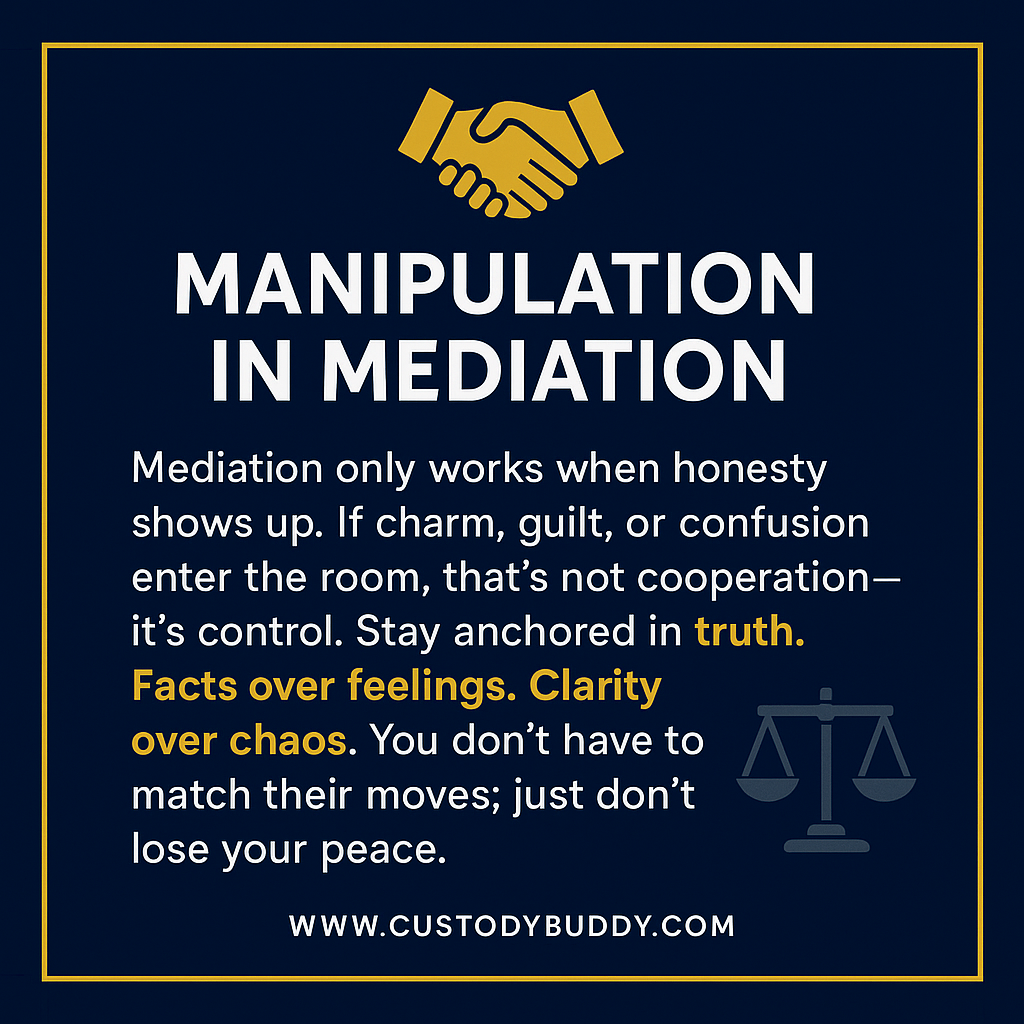
"Mediation only works when honesty shows up. If charm, guilt, or confusion enter the room, that's not cooperation—it's control. Stay anchored in truth. Facts over feelings. Clarity over chaos. You don't have to match their moves; just don't lose your peace."
Protective Strategies for Targeted Parents
Documentation is Key
- Keep detailed records of all communications
- Use communication tools like OurFamilyWizard
- Screenshot and archive exchanges
- Maintain emotional neutrality
Professional Resources in Canada
Legal Considerations
Recommended Professional Support
- Family law lawyers specializing in high-conflict cases
- Certified mediators trained in power dynamics
- Child psychology professionals
Recommended Reading
- "Splitting: Protecting Yourself While Divorcing Someone with Borderline or Narcissistic Personality Disorder"
- "Co-Parenting with a Toxic Ex" by Amy J.L. Baker
Technology Tools for Safe Communication
- OurFamilyWizard
- Talking Parents
- CoParently
[Visit www.CustodyBuddy.com to learn more about post-separation abuse in family law]
Legal Disclaimer
The information provided is for educational purposes only and does not constitute legal advice. Every situation is unique, and individuals should consult qualified legal professionals for personalized guidance.
Professional Consultation Recommended
- Seek individual legal counsel
- Consider professional mediation services
- Prioritize child's emotional well-being
Contact Support
- National Domestic Violence Hotline: 1-800-799-SAFE
- Family Law Information Centers (Provincial Resources)
Remember: Your peace is paramount. Protect yourself and your children through informed, strategic communication.
About the Author
Written and reviewed by Danielle Pike, Founder of CustodyBuddy.com — self-represented litigant, Ontario family law advocate, and legally blind mother of two navigating high-conflict co-parenting in the Ontario court system. Last reviewed: April 2026.
Need to document an incident for court?
The CustodyBuddy Incident Report Generator guides you step by step — Canadian legal classifications, automatic timestamps, and a court-ready export in under 3 minutes.
Legal disclaimer: This article is for educational purposes only and does not constitute legal advice. For advice specific to your situation, consult a qualified Ontario family lawyer or visit CLEO’s Steps to Justice.