“`html
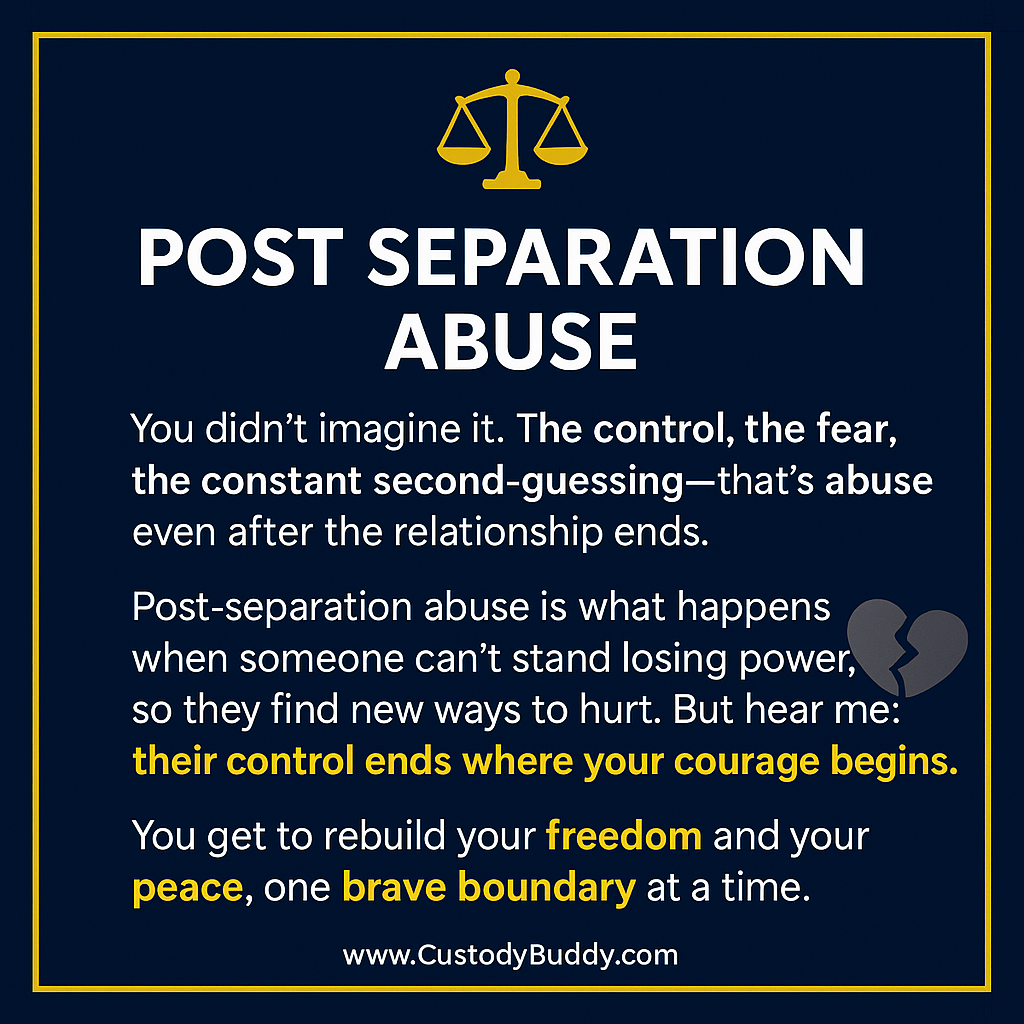
Post-Separation Abuse — You Didn’t Imagine It
“The danger to abused women and their children during separation is often greater than when they were living with their abuser.” — Justice Canada.
Leaving an abusive relationship is a remarkable act of courage. But what happens when the abuse doesn’t pack its bags with them? Enter post-separation abuse—a tough reality that some survivors face, with ex-partners using psychological, emotional, financial, and legal maneuvers to keep that grip on control. Yikes!
So, let’s shine a bright, encouraging light on post-separation abuse. We’ll explore what it looks like, how to recognize the signs, and ways to reclaim your safety and raid that sense of autonomy like a boss!
I. Understanding Post-Separation Abuse
What Is Post-Separation Abuse?
Think of post-separation abuse as your ex’s last-ditch effort to cling on, where they resort to mean tricks like:
- Stalking or surveillance — Monitor your every move or creep on your online activity—you know the fun stuff!
- Harassment through calls or texts— Pinging you at odd hours to provoke guilt or anxiety.
- Legal bullying — Spamming the court with frivolous claims (yup, that’s vexatious litigation for you!).
- Weaponizing custody — Pulling sneaky moves like false reports to child protection services or denying parenting time.
- Discrediting you — Rumor-mongering to family, friends, or professionals. Fun party trick, right?
One brave survivor shared, “Every time my phone buzzed, I flinched. He would text me at all hours, not to co-parent—just to remind me he was still in control.” Sounds fun, huh?
How Common Is It?
Here’s the real kicker: over half of intimate partner homicides occur right during the separation phase or the year following it, according to the Canadian Femicide Observatory. Plus, a staggering 1 in 5 women dealing with intimate partner violence report facing post-separation abuse. The impacts? Chronic anxiety, panic attacks, and the feeling that something’s about to go down—even when you’re tucked in bed.
II. The Cycle of Control
Why Do Some Ex-Partners Engage in Abuse Post-Separation?
Here’s the scoop: abuse isn’t about a little spat or communication troubles; it’s all about power. When someone walks away from a controlling relationship, the dynamic shifts, and for the abuser, this perceived loss can turn them into a real-life villain. It often comes in the guise of “just wanting to stay involved” or “concern for the kiddos.”
Red Flags That Signal Post-Separation Abuse
- Unwanted communication—texting, calls, social media stalking, or using your mutual friends as spies.
- Manipulation—is their new hobby turning family or friends against you?
- Sudden interest in parenting—like they suddenly want to be Dad of the Year after being absent!
- Criticizing or questioning your parenting in front of the little ones—smooth move!
- A nagging feeling that you’re always under their watchful eye.
Relational trauma expert Dr. Christine Cocchiola calls this “coercive control beyond the relationship.” Ain’t that a fun phrase?
III. Recognizing Your Courage
You Are Not Imagining It
One clever trick abusers use is to make you doubt your reality—because when you’re questioning yourself, guess what? You’re easier to control. If their texts leave you feeling anxious, confused, or like you need a glass of wine, hello red flag!
Validation matters. If you notice an ex causing unwanted chaos in your life post-separation, trust your instincts. That’s not cross-co-parenting; it’s emotional abuse, my friend.
Empowerment Through Knowledge
Many survivors find that once they put a name to these shenanigans—“post-separation abuse!”—everything starts to click. They can record behaviors and make empowered decisions. If this sounds familiar to you, remember: you are not alone! Thousands of folks in Canada are navigating these challenges, especially during family court times or in shared parenting situations.
IV. Establishing Boundaries
Why Boundaries Are Critical After Separation
Setting boundaries isn’t about being the mean ex—they’re your armor! Boundaries protect your mental health and deliver a clear message: the old abusive dynamics are no longer welcome here.
And guess what? They’re crucial for the kiddos too! Healthy communication sets the stage for them to learn about respect.
How to Set Boundaries with an Abusive Ex
- Stick to written communication—bye-bye phone calls!
- Answer only necessary questions like a superhero focused only on logistics.
- Keep replies neutral, factual, and short. We’re not writing a novel here!
- Block them from your personal social media. Bye-boo!
- Don’t bite the bait when they try to push your buttons.
Here are some handy phrases to keep in your pocket:
- “I will only respond to messages about our child’s medical or educational needs.”
- “I’m not here for in-person chats. Email is best.”
When to Involve Authorities
If their antics escalate into threats, stalking, or intimidation, document everything, don’t hesitate to involve local authorities. Yes, please! In Canada, section 264 of the Criminal Code makes criminal harassment an indictable offense—including repeated communication that sends chills down your spine.
V. Rebuilding Your Freedom and Peace
Healing Starts with You
Reclaiming peace is all about self-love! Survivors tell us that embracing practices that center their well-being is key:
- Team up with a trauma-informed therapist.
- Join virtual or in-person support groups like those from Women’s Shelters Canada.
- Journaling (put that pen to paper, hero!)—tracking patterns can help in court, too.
- Rediscover your joy through creative outlets or hobbies.
Build a Safe and Supportive Network
Healing is a team sport! Reach out to:
- Friends who respect your journey sans judgment.
- Family who honor your boundaries.
- Community-based legal advocacy groups like Battered Women’s Support Services (BWSS).
There’s strength in seeking help! You absolutely deserve that better life.
VI. Moving Forward
Speak Your Truth
You might not be ready to share your story today, and that’s completely okay. But one day, your voice could inspire someone else! Through casual conversations or advocacy work, survivors hold the key to changing the narrative. Education is pure resistance!
Look Ahead with Hope
Many survivors worry they’ll never trust again, but healing isn’t a one-way street. With time and support, it’s absolutely possible to build healthy, loving relationships grounded in respect and kindness.
Courage carried you this far, and with the right support, your future is bright, free of fear, and bursting with joy!
Continue Your Family Law Journey
Resources aren’t just information—they’re lifelines you can rely on as you rebuild safety, access support, and navigate the complexities of post-separation abuse. From understanding your rights to finding urgent shelter and trusted legal guidance, these Canadian resources help you reclaim autonomy with clarity and care.
- Department of Justice Canada — Family Violence Resources
- ShelterSafe.ca — Find emergency shelters by region in Canada
- Legal Information Society of Nova Scotia — Free family law information
- Canadian Network for the Prevention of Elder Abuse (CNPEA)
Conclusion
Post-separation abuse is real, and you didn’t imagine it! But with support, resources, and education, you can stand tall in your truth and rebuild your life!
If this post resonates with you, consider sharing it—no one should walk this road alone! If you’re feeling trapped in a cycle of harassment or control, reach out for legal, emotional, or community support. There is always a way forward and a stronger you waiting to emerge.
This is coaching advice, not legal advice. For legal help, consult a family lawyer or legal clinic in your province or territory.
“`
Recommended Resources
These books have helped many parents navigate similar challenges. As an Amazon Associate, I earn from qualifying purchases.
Crazy Time: Surviving Divorce and Building a New Life
by Abby Ellin
This book provides practical strategies for navigating the tumultuous emotions and conflicts that arise during and after a high-conflict divorce.
The Co-Parenting Handbook: Raising Well-Adjusted and Resilient Kids
by Karen B. Bonnell and Asha A. P. M. J. Ph.D.
Offering practical parenting strategies, this handbook focuses on co-parenting effectively and minimizing conflicts for the well-being of children.
Will I Ever Be Good Enough? Healing the Daughters of Narcissistic Mothers
by Karyl McBride
This book supports survivors of narcissistic relationships in understanding their past and reclaiming their sense of self, which is crucial for effective co-parenting.
About the Author
Written and reviewed by Danielle Pike, Founder of CustodyBuddy.com — self-represented litigant, Ontario family law advocate, and legally blind mother of two navigating high-conflict co-parenting in the Ontario court system. Last reviewed: April 2026.
Need to document an incident for court?
The CustodyBuddy Incident Report Generator guides you step by step — Canadian legal classifications, automatic timestamps, and a court-ready export in under 3 minutes.
Legal disclaimer: This article is for educational purposes only and does not constitute legal advice. For advice specific to your situation, consult a qualified Ontario family lawyer or visit CLEO’s Steps to Justice.