
No Bruises, Still Broken: Let’s Talk Emotional Abuse (and Maybe Crack a Smile)
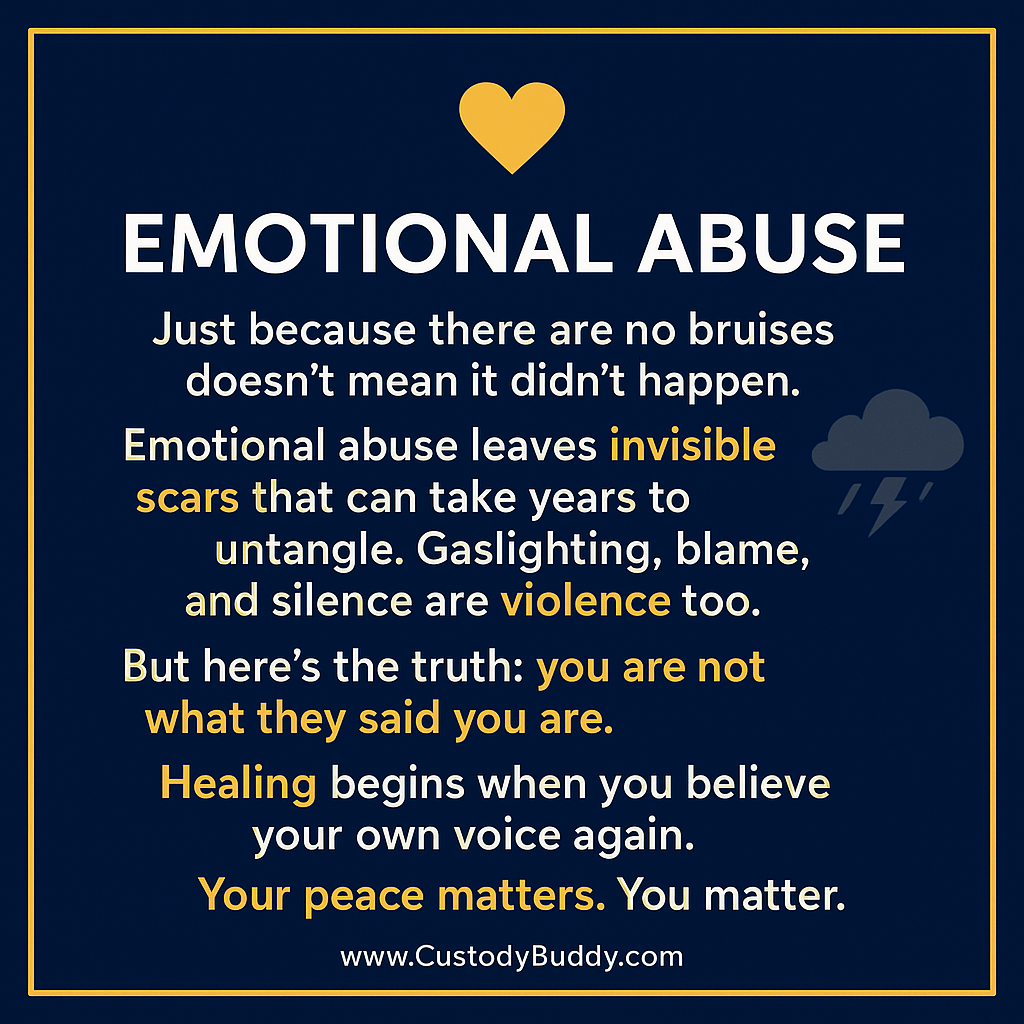
So, your ex never hit you. Great. That means it never happened, right? WRONG. Just because there are no bruises doesn’t mean you haven’t been through the emotional Thunderdome. Emotional abuse is a stealthy little devil—it slips in quietly, messes with your head, and leaves you wondering if you’re losing your mind or just in need of a nap and a new life.
Here’s the thing: if you’ve ever walked on eggshells so long you should’ve earned a degree in poultry management, you are not crazy. You are not being dramatic. You are not alone. Emotional abuse? It’s as real as a toddler with a glue stick and zero supervision. And it. Is. Exhausting.
Emotional Abuse: The Sneaky Saboteur
Unlike other forms of abuse that leave obvious (and tragic) signs like bruises or broken bones, emotional abuse wears an invisibility cloak. It’s made up of cruel words, icy silences, and twisted truths. Think psychological warfare with a side of manipulation—and NO, it’s not “just an argument.”
Classic Moves in the Emotional Ninja’s Playbook:
- Gaslighting: “That never happened.” “You’re imagining things.” Congrats! You’re now starring in your ex’s revisionist history project.
- Blame & Shaming: Everything—from the economy to your toddler’s temper tantrum—is now your fault. Bravo.
- The Silent Treatment: Oh, the joy of being ghosted by someone who lives three blocks away and shares split custody. Fun times.
These patterns are all about power, control, and messing with your sanity. In high-conflict custody situations, it gets turbocharged—because now kids and court orders are in the mix.
According to the Government of Canada, psychological abuse is one of the most common forms of family violence… and surprise, it’s also one of the most under-reported. Why? Because “invisible” doesn’t mean “imaginary.”
The Scars You Can’t See (But Totally Feel)
The mind is a powerful thing—and it remembers. Even if your ex never raised a hand, their words and manipulation can leave long-term effects on your mental health, your parenting confidence, and your ability to trust (others AND yourself).
Common Fallout from Emotional Abuse:
- That lovely thing called chronic anxiety (oh hey, fight-or-flight, haven’t seen you since… ten minutes ago)
- Depression that makes getting out of bed feel like climbing Everest—but without a Sherpa
- PTSD symptoms that range from hyper-alertness to feeling like you’re floating outside your own body during PTA meetings
One study from the Journal of Interpersonal Violence found that emotional abuse still packs a punch long after the relationship ends. Victims often grapple with self-doubt, identity issues, and all-around exhaustion. So, no—you’re not “too sensitive.” You’re a human, not a robot.
If you’ve ever been told, “You’re blowing this out of proportion”—take a deep breath, maybe roll your eyes once or twice, and know this: your pain is real. And you have every right to validate it.
They Lied. You’re Not Broken. (Let’s Say That Louder for the People in the Back)
If your confidence took a nosedive during or after emotional abuse, welcome to the club. Membership perks include self-blame, overthinking, and the constant urge to apologize to plants.
Here’s your friendly reminder: You are NOT the person your ex convinced you that you were.
- You’re not “crazy.” (Unless we’re talking about your dance moves at weddings. In which case… carry on.)
- You’re not a bad parent. You’ve been parenting in a minefield—and you’re still showing up.
- You’re not unworthy. You’re a freaking warrior who’s been through emotional war, and you deserve peace, joy, and a break. Like, a real one—with snacks and naps.
Try something small but powerful: say one kind thing to yourself in the mirror every morning. “You’ve got this.” “You’re a great mom/dad.” “You’re rocking those sweatpants, no shame.” These affirmations rewires the stuff those gaslighting Greatest Hits tried to erase.
So How the Heck Do You Heal?
Healing from emotional abuse isn’t like flipping a switch—it’s more like stumbling through IKEA with no map and 3 missing screws. There are setbacks, surprises, and the occasional ugly-cry. But there’s also progress—and each little step counts.
Some Easy(ish) Ways to Start:
- Call it what it was: Abuse. Say it. Own it. Rip the bandaid off and start the healing process.
- Find support: Talk to a therapist, join a group, reach out to that friend who always texts “Ugh, I see you” when your ex acts up.
- Prioritize YOU: Not just bubble baths—think sleep, decent meals, some movement (dancing in the kitchen counts), and boundaries galore.
- Rebuild your sense of self: Take a class, start a journal, write your own narrative—one without gaslighters and emotional landmines.
Bonus? According to CAMH, your healing gets a big bump when you have access to mental health support and a tight-knit community. So, no, you don’t have to do this solo. In fact, please don’t.
Boundaries Are Your New Superpower
Let’s talk boundaries—those beautiful fences that keep the nonsense out and your peace in. If you’re used to explaining your every move or feeling like you have to make everyone happy (spoiler alert: You. Don’t.), boundaries might feel weird at first. Like wearing someone else’s shoes. But your toes will thank you later.
Start with this: “I’m not available for chaos today.” Or, “Let’s keep our communication focused on the kids.” It’s not rude—it’s self-respect in action.
Want to feel even fancier? Create a “grey rock” communication style where you give them zero drama to feast on. You’re not cold; you’re strategic. Like a ninja, but emotionally mature.
Continue Your Family Law Journey
Resources tailored for healing after emotional abuse bridge the gap between understanding and action. They offer practical steps, legal context, and supportive communities to help you reclaim your voice and your peace.
Final Pep Talk (Because You Deserve One)
Emotional abuse is real. It hurts, it confuses, and it lingers. But it doesn’t get to author your story—unless you hand over the pen. Good news? That pen is still in your hand.
Healing might not be cute at first—think fewer angelic moments and more groggy steps forward—but it’s possible. And you’re already doing it. You’re reading this right now, aren’t you? That’s action. That’s courage.
You matter. Your story matters. And there is a peaceful, powerful version of your life waiting on the other side of this chaos.
Now go be the awesome, boundary-setting, emotionally-glowing legend you were born to be.
This is coaching advice, not legal advice. For any court-related or legal matters, please connect with a certified family law professional who can help you navigate your unique situation.
Recommended Resources
These books have helped many parents navigate similar challenges. As an Amazon Associate, I earn from qualifying purchases.
Healing from Emotional Abuse
by Ellen Bramwell
This book provides practical strategies for recognizing and recovering from the effects of emotional abuse, helping parents reclaim their strength.
The Emotionally Abusive Relationship
by Beverly Engel
This comprehensive guide helps readers understand emotional abuse and provides steps toward healing and empowerment, especially useful for co-parents.
The Narcissist You Know
by Joseph Burgo
This book offers insights into dealing with narcissistic individuals, providing readers with strategies for navigating toxic relationships during and after separation.
About the Author
Written and reviewed by Danielle Pike, Founder of CustodyBuddy.com — self-represented litigant, Ontario family law advocate, and legally blind mother of two navigating high-conflict co-parenting in the Ontario court system. Last reviewed: April 2026.
Need to document an incident for court?
The CustodyBuddy Incident Report Generator guides you step by step — Canadian legal classifications, automatic timestamps, and a court-ready export in under 3 minutes.
Legal disclaimer: This article is for educational purposes only and does not constitute legal advice. For advice specific to your situation, consult a qualified Ontario family lawyer or visit CLEO’s Steps to Justice.