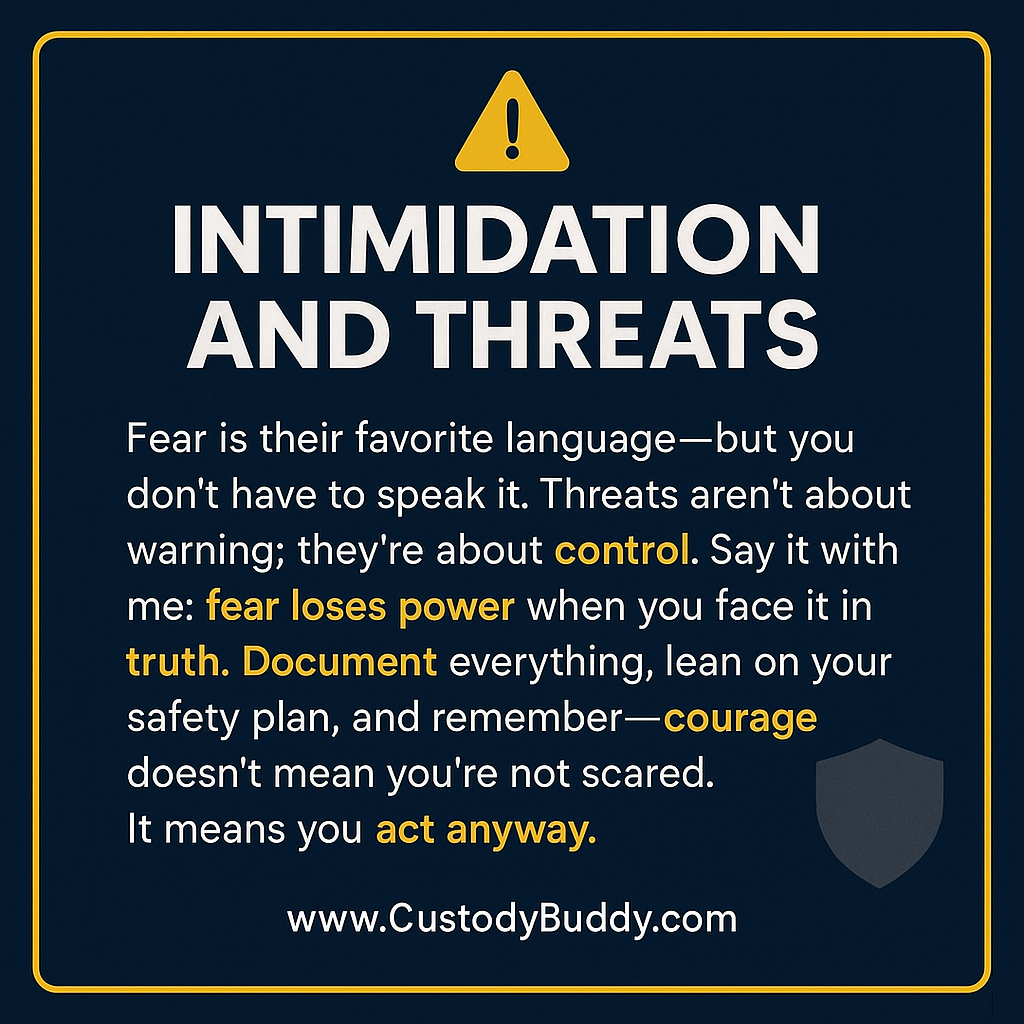
Fear Is Their Favorite Language—But You Don’t Have to Be Fluent
If the mere sight of a text from your ex makes your stomach do Olympic-level somersaults, welcome—you’re among friends. In high-conflict custody situations, intimidation can almost feel like a second language. But guess what? You don’t have to speak it. You’re allowed to delete that “panic” app from your internal system.
This guide is here to help you spot the mind games, disarm the threats, and walk into the next exchange feeling less “deer in headlights” and more “parental Jedi.” Because intimidation doesn’t make someone strong—it just means they’ve mistaken fear for power. We know better. And after this, so will you.
Fear Tactics 101: AKA, The Control Freak’s Tool Kit
What Does Intimidation Actually Look Like?
Spoiler alert: it’s not always yelling or dramatic threats about court battles. Sometimes it whispers. It sneaks in through passive-aggressive texts, long silences, or sudden mood swings that leave you wondering, “What did I do wrong?” (Correct answer: probably nothing.)
Intimidation is any behavior designed to make you second-guess yourself, dull your confidence, or backtrack on your boundaries. It’s emotional manipulation that says, “Be afraid,” even when there’s no reason to be. And when it comes from a co-parent? It’s not just exhausting, it’s dangerous to your emotional wellbeing.
Why Fear Is Their Favorite Seasoning
People who crave control often use fear the same way others use hot sauce—on everything. Fear keeps you tiptoeing, apologizing, second-guessing. It wears down your sense of balance until even standing up for yourself feels risky.
But fear-driven control isn’t your fault. If you’ve started creating boundaries, you might notice their scare tactics getting louder—that’s not a coincidence. It’s a sign you’re doing something right.
Red Flags That Should Be Flashing Like Vegas at Midnight
- They suddenly change tone when you say “no” or suggest something different
- They bring up custody or court as a threat instead of a process
- They play the “if you do this, then I’ll…” game—straight out of the fear playbook
- They slam doors, tower over you, or just “go dark” for effect
When you notice these signs, take them seriously. And then? Do less panicking and more planning. Because forewarned is four-armed. (Okay, that’s not the actual saying, but you get the idea.)
Playing Offense with Safety, Strategy, and Sass
Documentation Is Your Day-One Defense
Start keeping a record. Keep it boring. Keep it consistent. And keep it private. Whether it’s screenshots, journals, or secure cloud apps, documenting every interaction that’s unsettling isn’t paranoia—it’s preparation.
Note the who, what, when, how you responded—and how it made you feel. Judges love timelines. Therapists love logs. And your future self will thank you for not having to rely on memory alone.
Build a Safety Plan (That Doesn’t Include Panic)
Safety planning doesn’t mean you’re expecting the worst—it means you’re smart enough to be prepared. Like a parenting version of Batman (minus the cape… unless you’re feeling it).
- Pick a safe spot for child exchanges
- Have backups for pickups when things feel tense
- Save response scripts for hostile messages (so you’re not replying in rage)
- Know who to call when things feel off—trusted friends, your lawyer, or the local hotline
Need help getting started? We’ve got you.
Check out the CustodyBuddy Safety Planning Guide and Resource Hub loaded with action steps, templates, and sanity-saving wisdom.
Courage: The Stuff That Doesn’t Come in Cans
Courage Is Doing the Thing Anyway
Contrary to popular belief, courage doesn’t mean you’re not scared. Courage means your voice is shaking but you’re still speaking up. Think of it as fear with a side of “watch me.”
When you enforce boundaries, stay calm during chaos, or advocate for your child—even when your stomach is staging a protest inside—you’re practicing powerful courage. And that doesn’t just protect you. It shows your child what strength really looks like.
Small Ways to Grow Big Courage
- Take three deep breaths before replying to tough texts—bonus if you add a power pose
- Write one sticky-note reminder of your parenting values and clip it to the fridge
- Say out loud: “I don’t control them, but I do control me” (corny, but gold)
- Visualize a smooth handoff going exactly the way you want it to—it works!
Your Village = Your Superpower
Isolation is fear’s favorite fuel. Don’t give it kindling. Even sending a quick “that was weird, right?” text to a friend can be grounding. Worried about being awkward? Who cares. Awkward is brave when safety’s on the line.
One mom told us, “Bringing a friend to the exchange felt weird—until it felt strong.” Community builds backbone.
Continue Your Family Law Journey
When fear is part of the routine, the right tools and trusted guides can turn uncertainty into actionable steps. Our resources offer practical templates, safety planning, and expert support to help you protect your kids and your peace.
When to Ask for Help (Hint: Sooner Than You Think)
Help Is Not a Weakness—It’s Just Good Strategy
If worry has become your default setting—or if you’re feeling exhausted by the rollercoaster—it’s time to tag in some professionals. Family lawyers, trauma-informed therapists, custody coordinators… these people basically come with capes.
And legally speaking? Emotional abuse and threats do matter. Your story, your safety, and your mental health can absolutely play into custody decisions. Please don’t keep fear quiet—it doesn’t deserve that kind of power.
From Surviving to Inspiring
Every calm reply. Every documented moment. Every “not today, drama” decision you make? That’s legacy-building. It makes an impact not just on your kids—but on every parent watching and wondering: “Can I handle this too?”
Yes. You can. And when you figure out a trick that works—like the perfect morning playlist before court—share your wisdom. Someone out there desperately needs it.
Closing Thoughts (And A Big Virtual High-Five)
Fear, control, intimidation—they may be loud, but they are not all-powerful. With the right tools, a pinch of strategy, and a whole lot of nerve, their hold gets weaker. And your confidence? Well, that grows fast.
So go reheat your coffee, write down your truths, prep your replies, and call a friend. Because this—right here—is how intimidation loses. And you? You win.
Let’s Keep the Conversation Going
Beat intimidation and lived to laugh about it? Share your tips or empowerment stories in the comments or tag #CustodyBuddyCourage on social media. Someone out there needs your voice.
If you need support right now, head to our Resource Hub for tools, templates, and a whole lot of reassurance that you’ve got this—even when it’s messy.
Disclaimer
This article provides coaching-style information based on lived experience and peer support. It is not legal advice. For legal details or assistance with your specific case, consult a qualified family law professional in your area.
Recommended Resources
These books have helped many parents navigate similar challenges. As an Amazon Associate, I earn from qualifying purchases.
Mean People Suck: How to Deal with Difficult People
by Michael Wilder
This book provides practical strategies for dealing with difficult personalities, especially in high-conflict situations.
The Emotionally Abusive Relationship
by Beverly Engel
This book helps readers understand the dynamics of emotional abuse and offers tools for recovery and empowerment.
Co-Parenting Through Conflict: How to Implement an Effective Co-Parenting Strategy
by Judy Corcoran
This book provides insights and strategies for successful co-parenting in the face of conflict, ensuring children’s needs are prioritized.
About the Author
Written and reviewed by Danielle Pike, Founder of CustodyBuddy.com — self-represented litigant, Ontario family law advocate, and legally blind mother of two navigating high-conflict co-parenting in the Ontario court system. Last reviewed: April 2026.
Need to document an incident for court?
The CustodyBuddy Incident Report Generator guides you step by step — Canadian legal classifications, automatic timestamps, and a court-ready export in under 3 minutes.
Legal disclaimer: This article is for educational purposes only and does not constitute legal advice. For advice specific to your situation, consult a qualified Ontario family lawyer or visit CLEO’s Steps to Justice.