The Moment You Decide to Choose Yourself
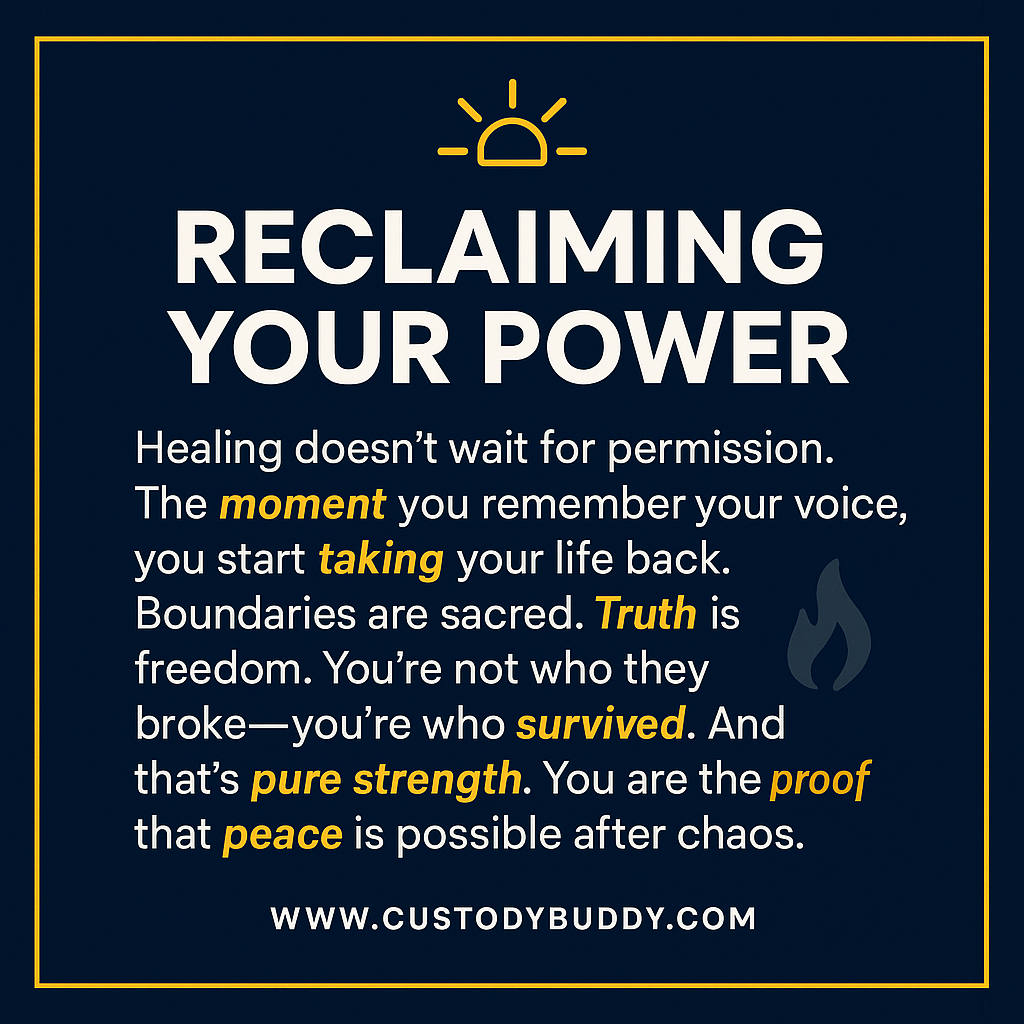
Let’s talk about one of the boldest things a person can do: stop waiting. Stop waiting for that apology you know is stuck somewhere deep in your ex’s ego vault. Stop waiting for approval to heal. Stop waiting for the world to take your side like it’s the final season of a courtroom drama. Nope, today you pick a new leading role—yourself.
Reclaiming your power doesn’t look like epic movie montages or a thousand candles flickering dramatically. It’s quieter. Braver. It’s choosing peace over chaos at 9 a.m. on a Tuesday. It’s drawing boundaries with a steady hand, not a sword. And if you’ve been dealing with high-conflict custody drama or recovering from post-separation abuse, you already know: choosing yourself is a revolutionary act.
Your Voice Deserves a Comeback Tour
What “Voice” Means (And Nope, It’s Not Just About Volume)
Your voice is more than spoken words—it’s that deep-down knowing of who you are and what you need, finally deciding it matters. If you’ve been silenced, steamrolled, or turned into a plot twist during co-parenting negotiations, your voice might feel like it went on a very long sabbatical.
The Aftermath of Being Silenced
Gaslighting. Invalidation. “You’re too sensitive.” Sound familiar? Tween-level eye roll incoming. These behaviors aren’t just frustrating—they train you to doubt reality. According to the American Psychological Association, prolonged emotional abuse can seriously mess with your self-trust (and yes, that’s the clinical term… sort of).
But good news: your voice isn’t gone. It’s just been hiding out, waiting for a safer vibe. Now that survival mode isn’t the only mode, it’s ready for a comeback. One brave word at a time.
Find It, Use It, Love It
Start simple. Jot down one true thing in a journal. Send a message to a friend that starts with “So, here’s what really went down.” Say “No” just because you feel like it. Boom—your nervous system just did a happy dance.
Let’s Talk Boundaries (aka Your Emotional Security System)
Not Walls, Babe—Fences With Style
Boundaries don’t make you rude. They make you rooted. Think of them less like walls and more like fences around your precious peace garden. Especially in high-conflict co-parenting? Boundaries are your new bestie.
Example: “We’ll keep communication in the parenting app.” Or: “No, I won’t check messages at midnight just because you’re bored.” Light a candle. Do a little celebratory shimmy. You just honored your energy.
Boundaries Are a Form of Self-Love—Fight Me on It
Yes, they feel awkward at first. Especially if your default is people-pleasing or trying to avoid World War III in the group chat. But each boundary you stick to says one powerful thing: I value myself more than I fear your reaction.
Quick Boundary Starters
- “I’ll respond via the co-parenting app by 5 p.m.”
- “I won’t be available for calls during family time.”
- “That doesn’t work for me.”—say it, no explanation required
- Create sacred no-contact days if possible, and stick with them
Boundaries aren’t about control. They’re about clarity. And your inner peace? That’s sacred real estate, friend.
Say It Louder: Your Truth Matters
You’re Not Too Much for Naming What Happened
Sometimes healing starts with the wildly simple sentence: “That wasn’t okay.” When you’ve been twisted into knots by someone else’s narcissistic narrative, embracing your truth is like stretching after years of curling up small. Uncomfortable? Maybe. Life-changing? Absolutely.
The ‘Shoulds’ Are a Scam
You “should” be quieter. You “should” forgive faster. You “should” act like nothing happened because it’s “better for the kids.” Nope. No thank you. Those are someone else’s rules, not yours. Your story? Totally valid. Your trauma? Real. Your right to talk about it? Solid gold.
From Hiding to Owning It
Try this tiny but mighty exercise: Write down three uncensored truths about your experience. Read them out loud. Eat a cupcake afterward if needed. That was brave. That was healing. That was you deciding to stop hiding.
You Are Not the Person They Tried to Break
You’re Still Here—and That’s a Plot Twist
Let’s get one thing straight: surviving what you’ve survived is not a minor subplot. It’s the main storyline. They might’ve tried to crush your spirit (and your phone battery with those 18-paragraph messages), but guess what? You’re still here. Still rising. Still you.
Rewrite the Narrative
You’re not the “unstable” co-parent they painted you as. You’re not too much. Not too emotional. Not “crazy.” You are a highly capable human navigating massive stress with grace, even if some days that looks like crying into your steering wheel between court dates. That’s still grace.
Resilience Means Knowing Your Own Power
Resilience isn’t pretending nothing happened. It’s deciding you’ll heal anyway. List the things you’ve gotten through—custody battles, gaslighting, late-night panic spirals. Then remind yourself: you are not who they shattered. You’re the one who picked up the pieces and made art.
Making Peace After All the Drama
Peace Isn’t the Prize at the End. It’s the Practice Now.
Peace isn’t gifted to you like the last rose on reality TV night. You have to build it, brick by brick. According to fancypants science folks at Psychology Today, activities like mindfulness and deep breathing can literally rewire your brain post-trauma. So, yeah, peace is possible—on purpose.
Try These Peace-Promoting Nuggets
- 10-minute mindfulness check-ins after court or co-parent convos
- “Peace inventory” journaling: What felt calm today?
- Join a trauma-informed support group—yes, venting counts as healing
Pro tip: You don’t wait for the chaos to disappear. You create a little peace bubble anyway. It grows. And eventually, that bubble becomes a new way of life.
First Steps Toward Your Comeback Story
One Step. That’s It.
You don’t heal all at once. Good thing, too—who has the time? One step today is enough. One journal entry. One loud “no.” One phone call to a therapist or friend who actually listens without a side of judgment.
Some Day-One Tools, Coming’ Up
- Write your truth without self-editing
- Book a consult with a trauma-informed therapist
- Try grounding techniques before high-stakes conversations
- Unfollow every chaos-magnet on your phone
Feels manageable? Good. That’s the idea. Calm doesn’t have to be complicated.
Continue Your Family Law Journey
Resources aren’t just add-ons—they’re anchors for real-world steps after post-separation abuse. They invite you to translate inner momentum into actionable support, building a steadier path to peace with every step you take. Explore tools that align with your healing and your rights, so you can speak your truth with confidence.
- CustodyBuddy’s Guided Journaling Toolkit
- Support links for survivor parents and legal rights education
- Explore CustodyBuddy’s free legal resource guides, emotional resilience tips, and community forums here
Here’s the Truth: You’re Already Doing It
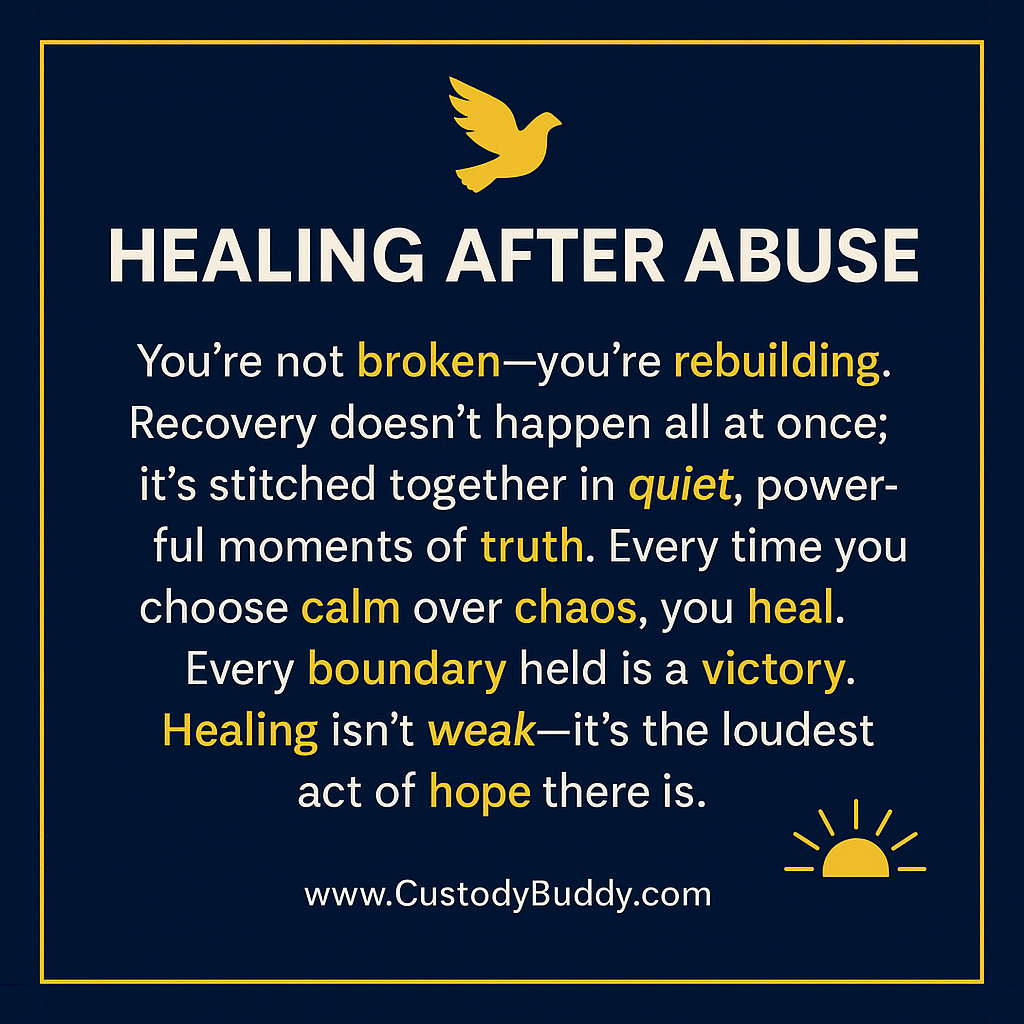
Healing doesn’t wait for perfect timing or polished court transcripts. It starts every time you say: “No more.” Every boundary, every truth, every peaceful breath is part of your recovery. You’re already doing the work—quietly, bravely, beautifully.
Your boundaries? Sacred.
Your voice? Unstoppable.
Your story? Just getting started.
So go ahead. Speak up. Set limits. Show your nervous system how safe you’ve become. And if that tiny whisper inside says “You’ve got this”? Listen to it. That’s you—remembering your magic.
This is coaching advice, not legal advice. For help with your specific situation, please consult a licensed family law attorney in your area.
Recommended Resources
These books have helped many parents navigate similar challenges. As an Amazon Associate, I earn from qualifying purchases.
The Body Keeps the Score
by Bessel van der Kolk
This groundbreaking book helps understand how trauma affects the body and mind, providing insights on healing from emotional wounds.
Overcoming Covert Emotional Abuse
by Debbie Mirza
This book offers practical strategies for healing from emotional abuse and reclaiming your power, perfect for anyone dealing with a toxic ex.
Healing from Emotional Trauma
by Various Authors
This compilation provides multiple perspectives on recovering from emotional trauma, helping those navigating high-conflict co-parenting scenarios.
About the Author
Written and reviewed by Danielle Pike, Founder of CustodyBuddy.com — self-represented litigant, Ontario family law advocate, and legally blind mother of two navigating high-conflict co-parenting in the Ontario court system. Last reviewed: April 2026.
Need to document an incident for court?
The CustodyBuddy Incident Report Generator guides you step by step — Canadian legal classifications, automatic timestamps, and a court-ready export in under 3 minutes.
Legal disclaimer: This article is for educational purposes only and does not constitute legal advice. For advice specific to your situation, consult a qualified Ontario family lawyer or visit CLEO’s Steps to Justice.