Introduction
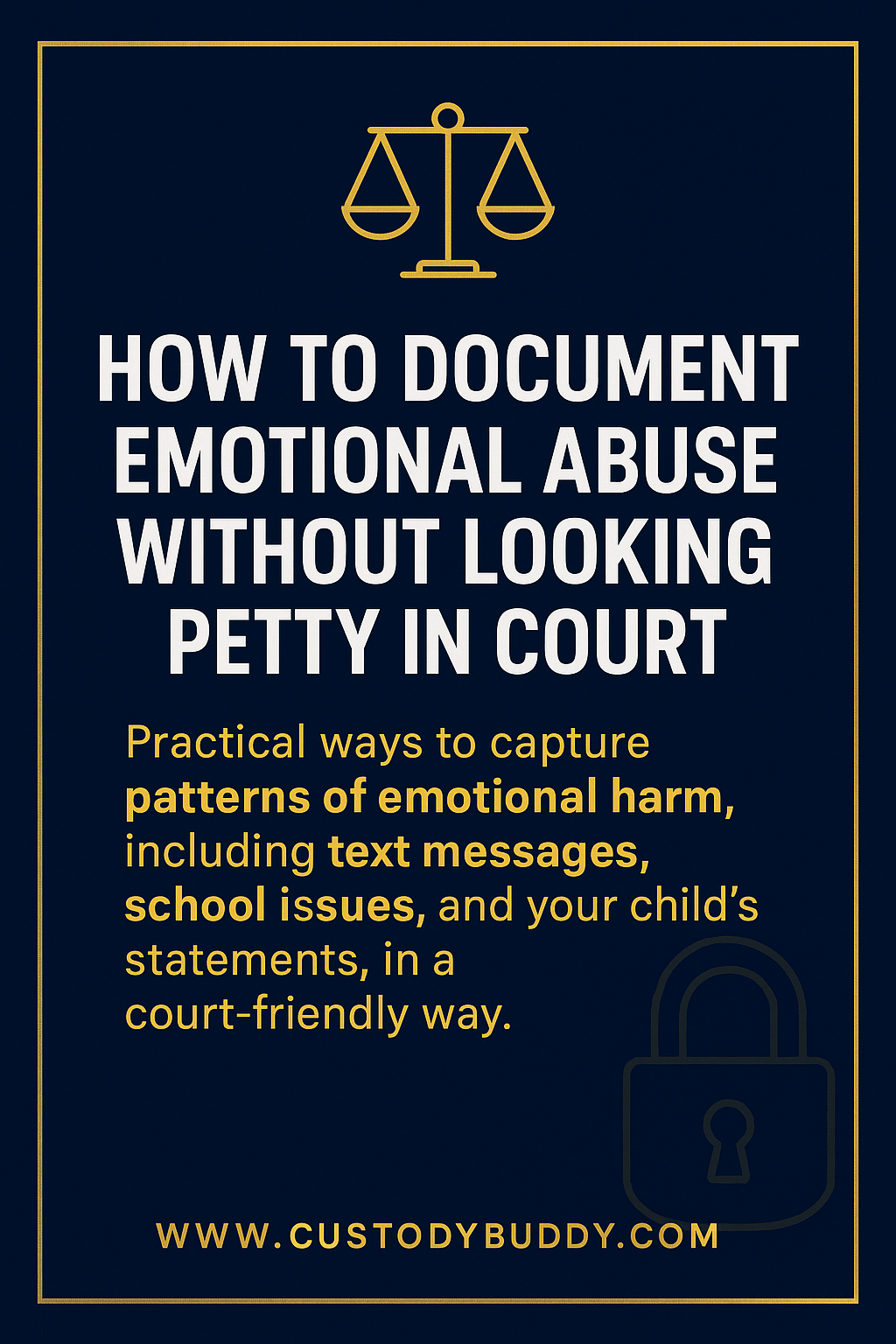
In the complex world of custody disputes and family court, emotional abuse often lingers as a silent yet powerful issue. Emotional abuse can significantly impact not only the mental health and well-being of the victims but also the outcome of custody cases. Yet, proving emotional harm in court remains challenging compared to more visible forms of abuse. This post aims to provide practical tips and strategies to effectively document emotional abuse, furnishing support without appearing petty.
Understanding Emotional Abuse
Emotional abuse encompasses behaviors that harm an individual’s self-worth or emotional well-being. Common forms include verbal attacks, manipulation, and isolation. In both children and adults, signs of emotional abuse might manifest as anxiety, depression, or withdrawal from social activities. These impacts can have profound and long-lasting consequences on one’s mental health and overall well-being.
Why Documentation Matters
Documentation serves as a crucial tool in legal proceedings, acting as tangible evidence that can lend credibility to claims of emotional abuse. However, misconceptions about what constitutes valid evidence often abound. It’s vital to distinguish between substantial documentation and what might be perceived as petty grievances. Proper documentation is proactive, organized, and focused on patterns over isolated incidents.
Practical Ways to Document Emotional Abuse
Capture Verbal Communications
Keeping a detailed journal of specific incidents is crucial. Note dates, times, and descriptions of each occurrence. Recording conversations, when lawful and appropriate in your jurisdiction, can bolster your claims with concrete evidence.
Utilize Text Messages and Emails
Organize and save all relevant digital communications. Look beyond single messages to highlight patterns of behavior. Focus on the recurring themes and language used, which can demonstrate a consistent pattern of emotional abuse.
Monitor School and Extracurricular Issues
Observe any behavior changes noted by teachers and include school reports discussing these issues. Maintain records of complaints or concerns raised by school staff, as these can provide third-party confirmation of the child’s experiences.
Collect Your Child’s Statements
Engage in sensitive, respectful dialogues with your child, and document any express concerns or quotes they share regarding their emotions or experiences. This provides insight into the child’s perspective of events.
Seek Professional Insights
Involving mental health professionals can offer valuable assessments or testimony. With the proper permissions, keep records of therapy sessions, which may serve as important corroborative evidence in court.
The nuanced nature of emotional abuse necessitates a considered approach to documentation. Remember, comprehensive evidence not only supports legal claims but also reflects the gravity of emotional abuse beyond overt, physical harm.
Recommended Resources
These books have helped many parents navigate similar challenges. As an Amazon Associate, I earn from qualifying purchases.
High-Conflict Co-Parenting: Your Essential Toolkit for a Successful Divorce and Family Rebuilding
by Amanda Sillars
This book offers practical, tactical strategies for managing high-conflict co-parenting with narcissistic ex-partners, including communication tools and legal preparation tips to document issues effectively without appearing petty.
Splitting: Protecting Yourself While Divorcing Someone with Borderline or Narcissistic Personality Disorder
by Bill Eddy LCSW, Esq.
It provides expert legal strategies and psychological insights for dealing with narcissistic or high-conflict exes in custody battles, focusing on evidence collection and court presentation to support emotional abuse claims credibly.
Divorcing a Narcissist: The Ultimate Guide to a No-Contact Clean Break Divorce from a Narcissist
by Cindy L. Decker
This guide combines emotional support for trauma recovery with practical advice on protecting children from emotional abuse in high-conflict co-parenting, including child psychology tips and documentation methods for court.
About the Author
Written and reviewed by Danielle Pike, Founder of CustodyBuddy.com — self-represented litigant, Ontario family law advocate, and legally blind mother of two navigating high-conflict co-parenting in the Ontario court system. Last reviewed: April 2026.
Need to document an incident for court?
The CustodyBuddy Incident Report Generator guides you step by step — Canadian legal classifications, automatic timestamps, and a court-ready export in under 3 minutes.
Legal disclaimer: This article is for educational purposes only and does not constitute legal advice. For advice specific to your situation, consult a qualified Ontario family lawyer or visit CLEO’s Steps to Justice.