Introduction: Who Let the Flying Monkeys Out?
If your life suddenly feels like a twisted sequel to The Wizard of Oz, except instead of a yellow brick road you’re dodging gossip, judgmental side-eyes, and possibly Karen from the PTA now giving you the cold shoulder—you might be dealing with flying monkeys.
Nope, not actual monkeys (though the idea of them in tiny vests is admittedly entertaining). We’re talking about Flying Monkeys in the realm of toxic relationships—third-party enablers who help abusers do their dirty work.
This blog post is your metaphorical Glenda the Good Witch: here to gift you clarity, offer protection spells (read: coping tools), and help you take back your power, sparkles optional.
Understanding the Flying Monkeys
Who Are These Mischievous Minions?
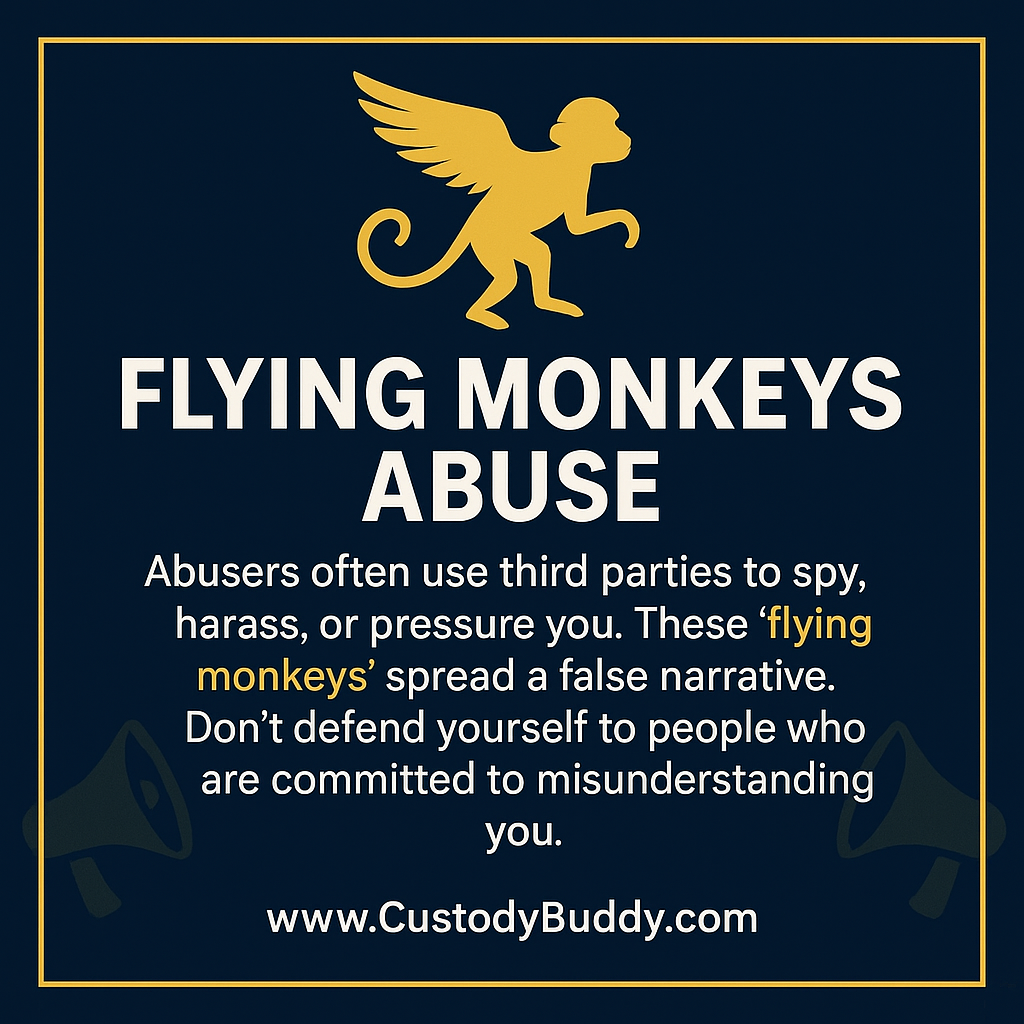
Flying monkeys are individuals—often friends, family members, or colleagues—who are recruited (or manipulated) by an abuser to continue the cycle of abuse through gossip, gaslighting, or flat-out harassment.
They may seem friendly, helpful, or “just trying to get both sides of the story,” but spoiler alert: they’re stirring the pot, not solving the soup.
- They repeat the abuser’s narrative without verifying facts.
- They guilt-trip or shame the victim for setting boundaries.
- They press for reconciliation in the name of “peace” (a.k.a. “shut up and take it”).
How Do Abusers Recruit Them?
This isn’t done via Craigslist ads. Instead, it’s an artful combo of:
- Emotional manipulation: Painting the victim as unstable, vindictive, or ungrateful.
- Selective storytelling: Dropping “just enough” sad breadcrumbs to get sympathy.
- Playing the hero or “concerned friend”: Especially effective with people who love to feel needed (or nosy).
Why Do Abusers Use Flying Monkeys?
Because Misery Loves…Backup?
Abusers rarely like to get their hands dirty directly. So they outsource.
- To isolate the victim: Turning mutual friends or family against them.
- To control the narrative: It’s harder to gaslight someone privately if Aunt Judy already heard a twisted version at book club.
- To avoid accountability: “It’s not me saying that… it’s just what people are saying.”
The Emotional Drive-By
Indirect harassment is their bread and butter. If the abuser can’t get to you directly, they send a monkey with a message, wrapped in faux concern or biting sarcasm.
- “I heard you’re being difficult about custody—are you okay?”
- “Everyone’s just so confused by your behavior lately.”
- “They’re really hurting, you know.” (A classic guilt grenade.)
The Impact of Flying Monkeys on Victims
Emotional Whiplash is Real
One monkey might be bad. A whole squad of them? emotionally draining.
- Heightened anxiety, like you’re constantly on the defense.
- Crushing self-doubt triggered by warped retellings of your life.
- Fatigue from fighting falsehoods and feeling alone in the truth.
Collateral Damage: Your Reputation and Relationships
It feels like living in a town where everyone’s seen a movie about you—only the script was written by someone bitter and the main character is an unrecognizable version of yourself.
- Friends stop calling, unsure who to believe.
- Professionals question your credibility.
- Trust fractures faster than a phone dropped on concrete.
Don’t Defend Yourself to Flying Monkeys
You Can’t Out-Explain a Determined Misunderstanding
This may sting a little, but here’s the truth: some people don’t want the truth. They want drama, loyalty perks, or just to avoid examining their own unhealthy patterns. That’s why defending yourself to flying monkeys is a waste of your breath—and your peace.
- They’re not neutral judges; they’re already team “abuser.”
- Clarification rarely undoes manipulation. It often feeds new rounds of gossip.
- Your time and energy deserve better than pointless debates.
Know the Signs: Spotting the Winged Enablers
No banana trail needed. Here’s how to tell if someone’s been handed a tiny cape and flown in to meddle:
- They defend the abuser unpromptedly.
- They start sentences with “Well, to be fair…”
- They claim neutrality but always parrot the abuser’s side of events.
- Your gut just screams “Nope.”
Those who truly support you won’t demand blind loyalty—or give you lectures in the tone of a disappointed teacher. They show up with listening ears and quiet strength. Hang on to those.
Continue Your Family Law Journey
Understanding flying monkeys is the first step—but protecting yourself and your family requires actionable strategies. Whether you’re navigating custody disputes, documenting harassment patterns, or rebuilding your support network, you need clarity on your legal options and practical next steps.
The resources below are designed to help you move from awareness to action, offering guidance on everything from enforcing protective orders to establishing healthy co-parenting boundaries in the face of manipulation.
- Triangulation and Flying Monkeys: Recognizing Narcissistic Manipulation Tactics
- Flying Monkeys in High-Conflict Family Dynamics
- 9 Crucial Facts About Flying Monkeys You Must Know
- What Flying Monkeys Mean in Narcissistic Abuse Contexts
- Narcissists, Triangulation, and Flying Monkeys: A Deep Dive
This is coaching advice, not legal advice. For legal concerns, always consult a licensed attorney familiar with your local laws and circumstances.
Recommended Resources
These books have helped many parents navigate similar challenges. As an Amazon Associate, I earn from qualifying purchases.
Divorce Poison: How To Protect Your Family From Bad Mouthed Ex-Partners
by A. J. Adams
This book provides practical strategies for parents to counteract the harmful narratives spread by high-conflict ex-partners.
The Co-Parenting Handbook: Raising Well-Adjusted and Resilient Kids Together
by Karen Bonnell and A.J. Jacobs
It offers guidance on effective co-parenting strategies while managing the psychological impacts of dealing with a toxic ex.
Will I Ever Be Good Enough?: Healing the Daughters of Narcissistic Mothers
by Karyl McBride
This book addresses trauma recovery, helping readers understand their experiences with narcissistic relationships while providing emotional support.
About the Author
Written and reviewed by Danielle Pike, Founder of CustodyBuddy.com — self-represented litigant, Ontario family law advocate, and legally blind mother of two navigating high-conflict co-parenting in the Ontario court system. Last reviewed: April 2026.
Need to document an incident for court?
The CustodyBuddy Incident Report Generator guides you step by step — Canadian legal classifications, automatic timestamps, and a court-ready export in under 3 minutes.
Legal disclaimer: This article is for educational purposes only and does not constitute legal advice. For advice specific to your situation, consult a qualified Ontario family lawyer or visit CLEO’s Steps to Justice.