“`html
Introduction
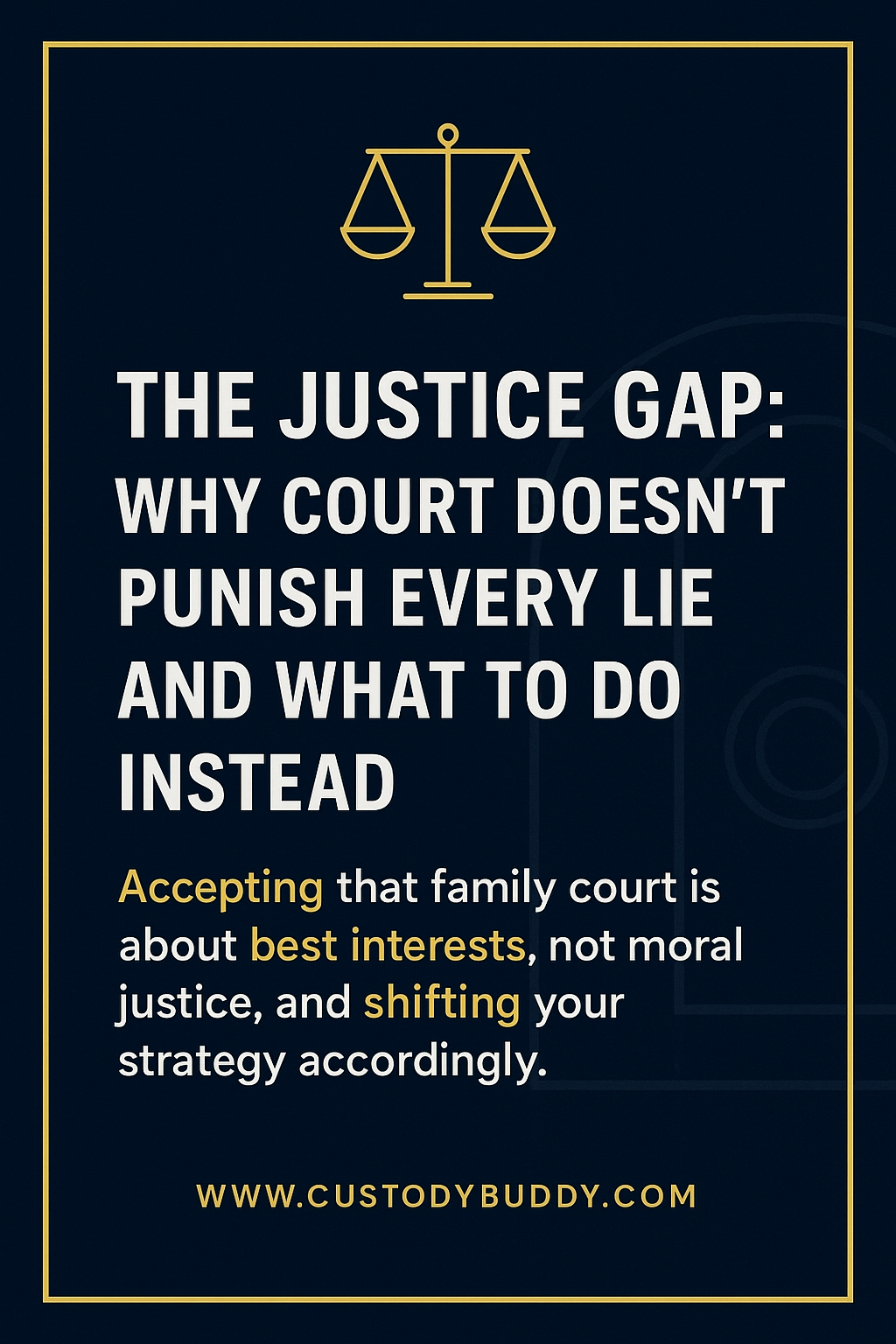
In Canada, the “justice gap” in family court refers to the disparity between moral justice and legal outcomes. Understanding this difference is crucial for anyone navigating the family court system. The purpose of this post is to help parents adjust their strategies effectively, focusing on the best interests of their children rather than seeking moral vindication.
Understanding the Family Court System
Family Court’s Purpose
Family court is primarily designed to focus on the best interests of the child. This objective differs significantly from criminal courts, where the emphasis is on determining guilt and administering punishment.
Common Misconceptions
Many perceive that any lie told in court should automatically lead to punishment. However, in family court, not every falsehood is addressed due to factors like limited resources, varying levels of evidence, and unequal access to legal representation.
The Realities of Family Court: Why Lies May Go Unpunished
Influencing Factors
Court decisions are often influenced by the availability of evidence and tactics such as emotional manipulation. Such factors complicate the pursuit of truth and fairness.
The Burden of Proof
The burden of proof lies heavily on the party alleging a lie. Without substantial evidence, it becomes challenging to hold the offending party accountable, highlighting the gap between moral justice and judicial decisions.
Accepting the Focus on Best Interests
Redefining Justice
In family court, “justice” is redefined to prioritize children’s well-being above parental disputes. This reorientation should influence parents to adopt strategies that are child-centered rather than punitive.
Collaboration vs. Confrontation
Approaching cases with a spirit of collaboration rather than confrontation can lead to more favorable outcomes for the child, as courts value cooperative co-parenting.
Shifting Your Strategy in Family Court
Understanding Court Values
- Document evidence meticulously to support your claims.
- Engage in mediation and negotiation whenever possible.
- Keep communication centered on the child’s needs and welfare.
- Consult with legal professionals to guide your court strategies effectively.
Building a Support System
Besides legal guidance, enlisting the help of therapists or counselors can provide a holistic support system during family court proceedings. Such professionals can offer emotional and psychological support, which is invaluable for both parents and children during disputes.
“`
Recommended Resources
These books have helped many parents navigate similar challenges. As an Amazon Associate, I earn from qualifying purchases.
Splitting: Protecting Yourself While Divorcing Someone with Borderline or Narcissistic Personality Disorder (2nd Edition)
by Bill Eddy and Randi Kreger
Offers concrete legal, documentation, and communication strategies for surviving high-conflict, narcissistic ex-partners in family court.
BIFF for Coparent Communication: Your Guide to Difficult Texts, Emails, and Social Media Posts
by Bill Eddy and Annette Burns
Gives tactical templates for calm, child-focused responses that play well in court when dealing with hostile or manipulative co-parents.
Adult Children of Parental Alienation Syndrome: Breaking the Ties That Bind
by Amy J. L. Baker
Provides child-psychology insight and trauma-aware guidance to help parents understand and mitigate the impact of high-conflict dynamics and alienation on kids.
About the Author
Written and reviewed by Danielle Pike, Founder of CustodyBuddy.com — self-represented litigant, Ontario family law advocate, and legally blind mother of two navigating high-conflict co-parenting in the Ontario court system. Last reviewed: April 2026.
Need to document an incident for court?
The CustodyBuddy Incident Report Generator guides you step by step — Canadian legal classifications, automatic timestamps, and a court-ready export in under 3 minutes.
Legal disclaimer: This article is for educational purposes only and does not constitute legal advice. For advice specific to your situation, consult a qualified Ontario family lawyer or visit CLEO’s Steps to Justice.