Understanding Restraining Orders: Protecting Yourself and Your Family
In high-conflict co-parenting situations, personal safety becomes paramount. A restraining order isn't about punishment—it's about protection.
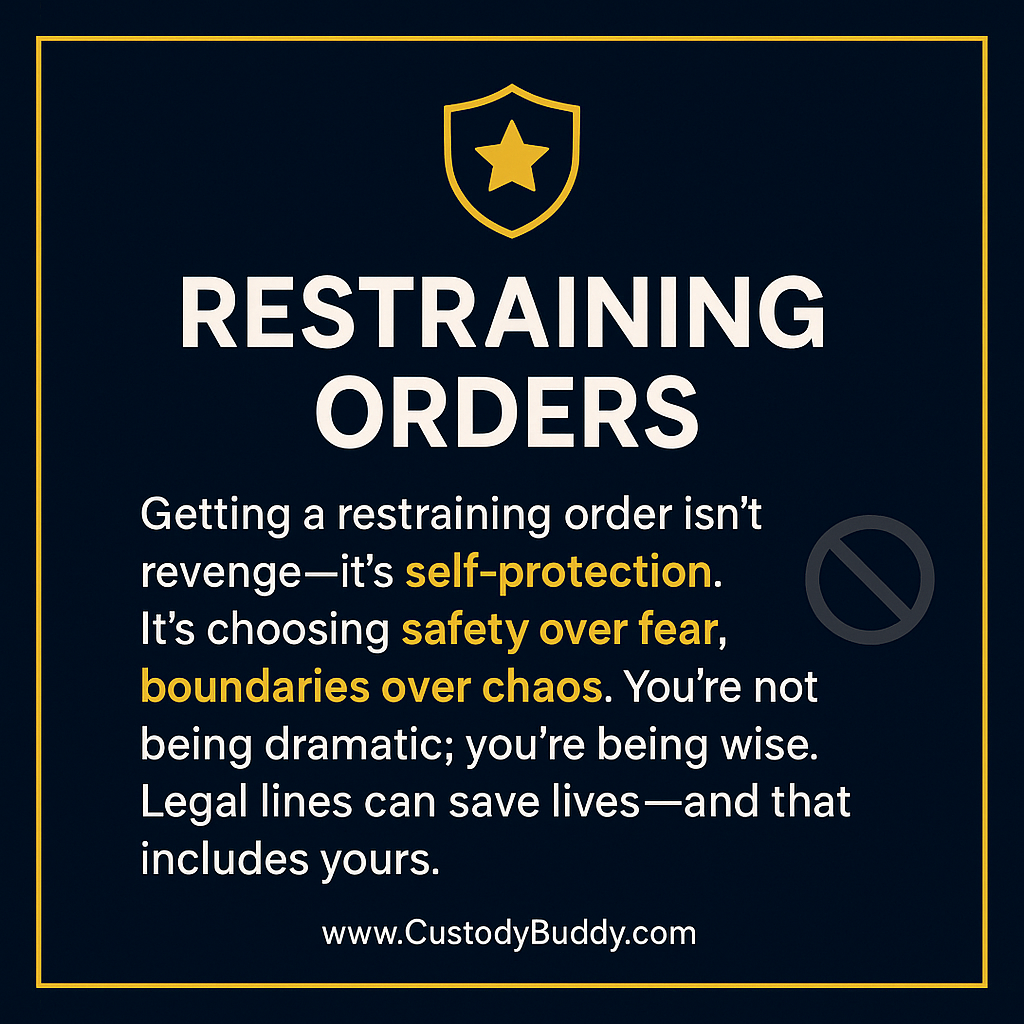
"Getting a restraining order isn't revenge—it's self-protection. It's choosing safety over fear, boundaries over chaos. You're not being dramatic; you're being wise. Legal lines can save lives—and that includes yours."
What is a Restraining Order?
A restraining order is a legal document issued by a court that prohibits an individual from certain behaviors, typically:
- Contacting the protected person
- Approaching within a specified distance
- Entering specific locations
- Communicating through third parties
Types of Restraining Orders in Canada
1. Emergency Protection Orders
- Immediate protection in domestic violence situations
- Can be obtained quickly without prior notice
- Typically last up to 90 days
2. Peace Bonds
- Preventative court order
- Requires demonstrating reasonable fear of personal safety
- Can include specific conditions of behavior
Legal Resources in Canada
National Resources
Provincial Support
- Ontario: Victim Support Services
- British Columbia: VictimLINK
Steps to Obtain a Restraining Order
- Document all incidents of harassment or abuse
- Gather evidence (texts, emails, witness statements)
- Contact local law enforcement
- Consult with a family law attorney
- File appropriate court documents
Protecting Children in High-Conflict Situations
- Maintain detailed communication records
- Use monitored communication platforms
- Prioritize children's emotional and physical safety
Learn more about post-separation abuse at www.CustodyBuddy.com
Legal Disclaimer
This article provides general information and should not be considered legal advice. Each situation is unique, and individuals should consult with legal professionals to understand their specific rights and options. Laws vary by province and individual circumstances.
Recommended consultation: Licensed family law attorney or local victim support services.
About the Author
Written and reviewed by Danielle Pike, Founder of CustodyBuddy.com — self-represented litigant, Ontario family law advocate, and legally blind mother of two navigating high-conflict co-parenting in the Ontario court system. Last reviewed: April 2026.
Need to document an incident for court?
The CustodyBuddy Incident Report Generator guides you step by step — Canadian legal classifications, automatic timestamps, and a court-ready export in under 3 minutes.
Legal disclaimer: This article is for educational purposes only and does not constitute legal advice. For advice specific to your situation, consult a qualified Ontario family lawyer or visit CLEO’s Steps to Justice.